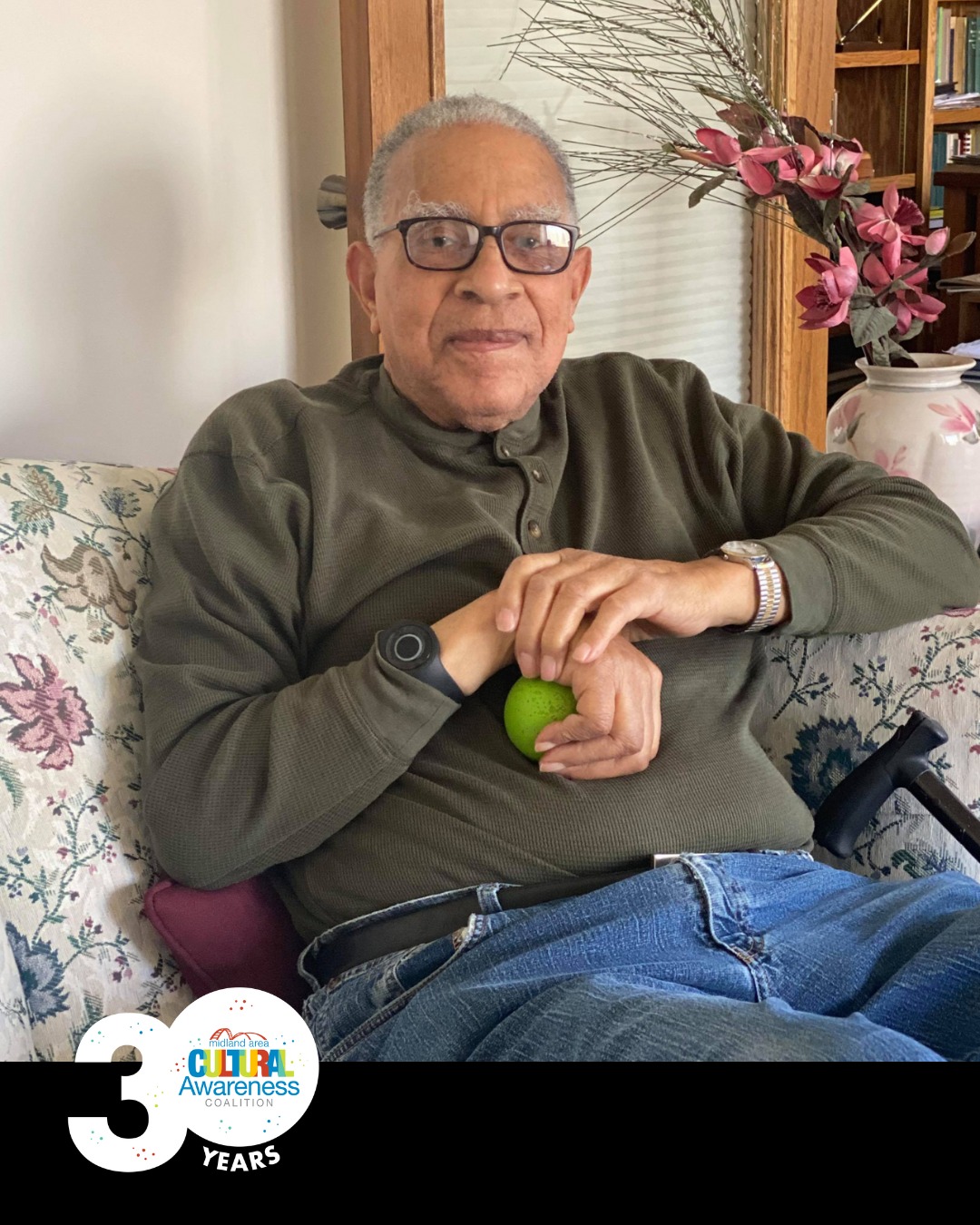
Prologue: The story of the Midland Area Cultural Awareness Coalition is rooted in the belief that community is strengthened when people choose understanding, equity, and service. Few individuals embodied that belief as fully as Dr. Linneaus “Lin” Dorman. A founding voice of the Coalition, Dr. Dorman helped shape its early vision at a time when intentional conversations about culture, belonging, and representation were both necessary and courageous. His leadership helped lay the groundwork for a Coalition that, more than three decades later, continues to promote inclusion, respect, and empathy throughout the Midland area.
Dr. Dorman’s life was marked by quiet determination and meaningful firsts. As the first African American research chemist at Dow Chemical, he navigated spaces where he was often the only one, carrying himself with integrity while opening doors for others to follow. That same commitment to progress and fairness guided his community work, including his long-standing service to the Midland Area Community Foundation and his role in helping establish the Cultural Awareness Coalition. Dr. Dorman passed away on October 10, 2025, at the age of 90, leaving behind a legacy defined by service, intellect, and an unwavering belief in the power of community. The words that follow reflect not only his wisdom, but the values he spent a lifetime living out.
Dr. Linneaus “Lin” Dorman, In His Own Words:
“My whole story begins some while ago on June 28th, 1935, in Orangeburg, South Carolina. I was given the name Linneaus Cuthbert Dorman, named after the doctor who brought me into the world.
I was the fifth of five children, my mother’s baby. She was a rural school teacher, and although there was a lot to talk about in the segregated South, my mother’s interest for me was education, education, education. That gave me a good start and created an interest in learning.
Growing up, I began to wonder why there were segregated schools in the first place. I began to wonder what the white students were like: were they smarter? Better in some way?
One day in high school, I saw a brochure with the title ‘Do you want to go to college?’. It caught my attention, mainly because I was determined to become a chemist, and they were trying to help Black students get into integrated schools located in the North. It came with a form: asking about your grades, did you have any relatives in the North you could live with, your interests, and so forth. They even composed a letter for you to use and to try and get into a school they might recommend.
I filled out the form, sent it in, and received back a plethora of information along with the names of five institutions and descriptions of each. One caught my eye: Bradley University in Peoria, Illinois. I applied, received two scholarships, and was in.
I started rather slowly, but in time, became a good student. I even became an ROTC cadet, meaning that upon graduation, I’d have to serve three years in the Air Force. But later that spring, I received a letter. Because the Korean War was winding down, the government didn’t need as many officers, and I was being discharged. I was crushed.
But my chemistry professor said, ‘Now you can go to graduate school.’
The next thing I knew, I was enrolled in Indiana University, working on a Ph.D. in Chemistry, and working as a teacher’s assistant. In the meantime, I fell in love with a woman from Peoria, Phae, and got married.
When it came time to graduate, the issue became interviewing for a job. Me and a fellow graduate student got our first taste of real discrimination during our interviews, which was very disheartening.
But later in the interview season, Dow Chemical made an invitation for interviews. I was conflicted: I heard from grad buddies that Dow would not hire me because of my race. But I was holding the Dow Chemical Fellowship that year, so I thought out of respect for IU’s Chemistry Department, I should do an interview.
Apparently, Dow had a change in policy and was looking for Black chemists… and you know the rest of the story. On November 1, 1960, I started my career as the first African-American to work at Dow in Midland. At last, the education that my parents had sought for me was complete.
But I couldn’t devote all of my energy to working at Dow—interaction with the community became just as important to me. Realizing that much of my journey from Orangeburg could not have been possible without the help of others, the moment I began working, implored me to do the same. Over the years, I became involved in many things: The Martin Luther King Endowed Fellowship at SVSU and other programs and scholarships at other universities, the Midland Believes scholarship fund at the Midland Area Community Foundation, and many other efforts.
It pleases me to know that I am doing things to help others in the same way I was helped.